Root canal treatment
Treatment for a tooth whose nerve has become inflamed or infected: the inside of the tooth is cleaned, disinfected and sealed so that it can be restored and kept.
Read about this treatmentLoughborough · Leicestershire
Root canal treatment, retreatment and tooth pain assessment for patients in Loughborough and across Leicestershire, led by Angel Ognemirov, MSc Endodontics. Calm, unhurried appointments — with particular care for anxious patients — and a clear aim: keeping your natural teeth.
Book an appointment online, or call the practice to speak to someone directly.
Call 0116 270 0550 and tell us your symptoms are urgent — acute pain and swelling are seen as a priority.
Emergency endodontic careEndodontic care
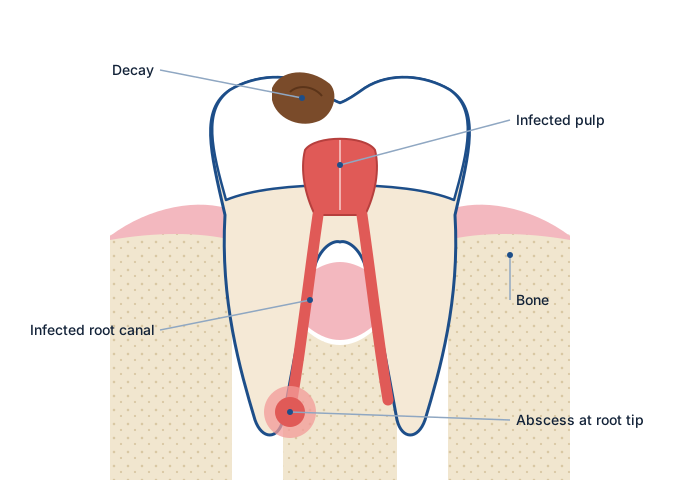
Inside each tooth is a living core of nerves and blood vessels. When decay, a crack or a knock lets bacteria reach it, the result is the deep, throbbing pain that most people recognise as "needing a root canal" — or, if the nerve has already died, an infection in the bone that may hurt or may be found only on an X-ray.
Endodontics is the branch of dentistry that treats exactly this. Root canal treatment, retreatment of failed root fillings, root-end surgery and the care of cracked and injured teeth all aim to do one thing: remove the problem inside the tooth so that the tooth itself can stay.
Endodontist Loughborough concentrates on this work. We do not provide check-ups, hygiene visits or general dentistry — you stay with your own dentist for those — which lets us give each tooth the time and attention that careful endodontic treatment needs.
Treatments
Root canal treatment in Loughborough, retreatment of failed root fillings and everything around them — each service starts with an honest assessment and a plan in plain English.
Treatment for a tooth whose nerve has become inflamed or infected: the inside of the tooth is cleaned, disinfected and sealed so that it can be restored and kept.
Read about this treatmentWhen a root-treated tooth becomes infected again, the earlier filling is removed, the canal system is re-cleaned and the tooth is sealed afresh — often avoiding extraction.
Read about this treatmentA small surgical procedure to remove infection at the tip of the root when it cannot be reached through the tooth, carried out under local anaesthetic.
Read about this treatmentThat sharp pain when you bite may be a crack. Finding it early and judging its depth is what decides whether the tooth can be kept.
Read about this treatmentTeeth that have been knocked, chipped, loosened or knocked out need prompt assessment and careful follow-up to protect the nerve inside them.
Read about this treatmentA thorough consultation to find out which tooth is causing your symptoms, what is wrong with it and whether — and how — it can be saved.
Read about this treatmentAn abscess at the root of a tooth will not clear up on its own. We explain what has happened and treat the cause so that the infection resolves and the tooth can be kept.
Read about this treatmentSevere toothache, a swelling or a tooth that keeps you awake needs prompt attention. Tell us when you contact the practice and we will see you as soon as we can.
Read about this treatmentBefore a tooth comes out, find out whether it could be kept. An honest look at the options and the likely outcome of each, so that the decision is yours.
Can my tooth be saved?What to expect
Telephone the practice to arrange an assessment. Mention if you are in pain, whether your dentist has seen the tooth and if you have recent X-rays.
We listen, examine, test the tooth and take any X-rays required. You leave with a written diagnosis, a plan and the fee — or the reassurance that treatment is not needed.
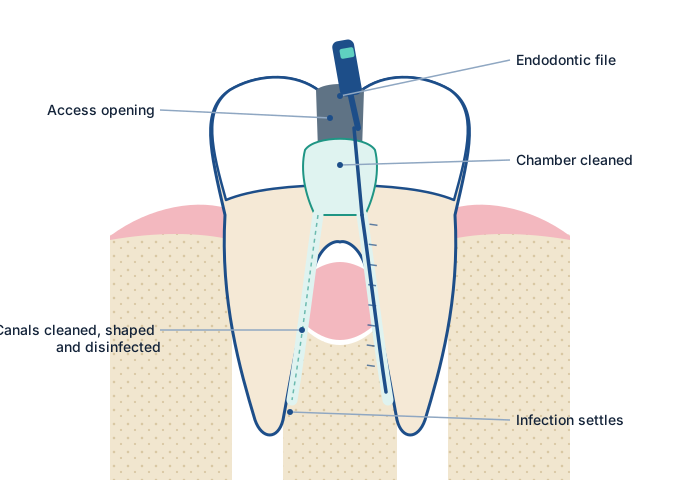
Under local anaesthetic, the canal system is cleaned, disinfected and sealed, usually in a single visit. Emergency cases are made comfortable first and completed later.
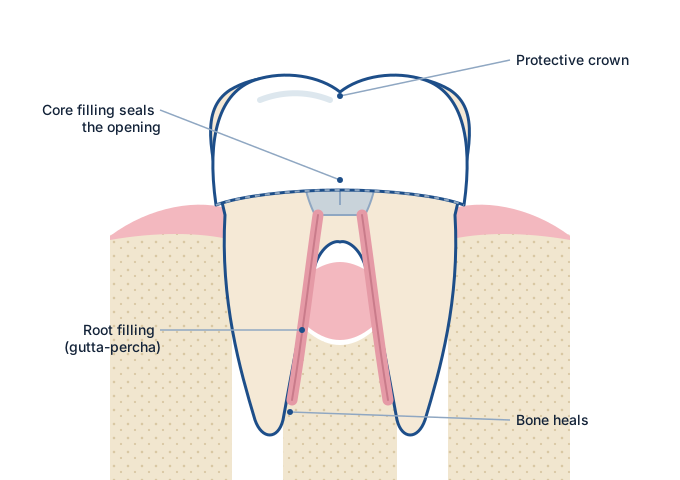
Your own dentist fits the crown or filling that protects the tooth. Months later we check on an X-ray that the bone has healed, and your dentist receives our report.
Emergency endodontic care
Pain that comes on by itself, lingers after a hot drink or keeps you awake usually means the nerve inside the tooth is inflamed or has died. Painkillers dull it for a few hours; they do not treat it, and an infection left alone can spread into the bone and beyond.
Contact the practice and tell us your symptoms are urgent. We will see you as soon as we can, take away the pain and then plan the rest of the treatment at a time that suits you.
Seek medical help immediately if a swelling is spreading quickly, you find it hard to swallow or breathe, or you feel very unwell: contact NHS 111 or go to A&E.

About me
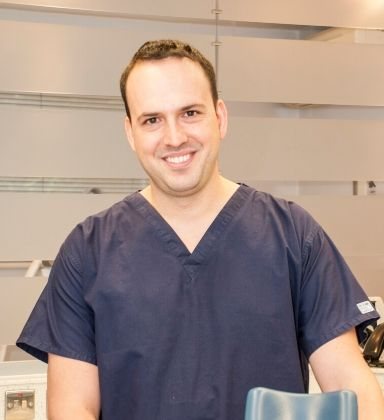
Angel Ognemirov is an endodontist with an MSc in Endodontics from the University of Chester. Alongside his endodontic training he has completed courses in oral and intravenous dental sedation at Guy's Hospital in London, which informs the way he looks after patients who find dental treatment difficult.
Much of Angel's work involves people who have put off treatment because of anxiety. His appointments are planned around them: each step is explained before it happens, local anaesthetic is checked before work begins, and there is always time to pause. The clinical approach is precise and modern; the atmosphere is deliberately calm.
Angel also holds a certificate in Restorative Dentistry — so the final restoration of a root-treated tooth is always part of the plan — and is an active member of the Society for the Advancement of Anaesthesia in Dentistry (SAAD).
His aim for every patient in Loughborough and the surrounding area is the same: to relieve pain, treat the cause and keep the natural tooth wherever it can be kept.
Specialist-level care
Root canal anatomy is intricate. Canals curve, divide and narrow to a fraction of a millimetre, and a back tooth often has more canals than first meet the eye. A missed canal, a root filling that stops short or a seal that leaks are the usual reasons a treatment fails later.
Endodontic care approaches the task differently: a diagnosis confirmed by testing, magnification and modern techniques for finding and cleaning the canals, disinfection carried to the full length of each root, and the appointment time needed to do it once and do it well.
The result is not a promise — no honest clinician can guarantee the outcome of any treatment — but it is the best chance of a tooth that heals, functions and lasts.
Good endodontics is mostly patience and attention to detail. The equipment helps; the care is the point.
Tooth preservation
"It'll have to come out" is sometimes true and sometimes said too soon. An infected tooth, a failed root filling or a canal that proved difficult for someone else is not, on its own, a reason to lose a tooth that could be treated.
We assess each tooth on its merits — how much sound structure remains, whether there is a crack, how the bone and gum around it are faring and what the canals look like — and give you a written view of the realistic options and their likely success.
If the right answer is extraction, you will hear it from us plainly, together with a note to your dentist about replacement. If the tooth can be saved, we will tell you how.
Your questions
Plain answers to the questions we hear most. The patient guides go into more detail.
An endodontist treats the inside of the tooth: the nerve and blood supply, the root canals and the infections that develop when they are damaged. That covers root canal treatment, retreatment of failed root fillings, root-end surgery, cracked teeth and dental injuries. The aim in every case is to settle the problem so that the natural tooth can be kept.
When the nerve inside a tooth is inflamed beyond recovery or has died. Typical signs are pain that lingers after hot or cold, toothache that comes on by itself or at night, tenderness on biting, a swelling or a gum boil, or a tooth that has darkened after a knock. An infection can also be found on an X-ray with no symptoms at all.
Not with modern anaesthetic. The tooth is numbed and checked before we start, and if you feel anything sharp we stop and top up. Most patients describe pressure and vibration rather than pain. A few days of tenderness afterwards is normal and settles with ordinary painkillers.
Usually one appointment of between an hour and an hour and a half. A heavily infected tooth, a retreatment or a tooth with unusual anatomy may need a second visit a week or two later.
In most cases, yes. Cleaning and sealing the canals removes the infection and lets the bone around the root heal. The exceptions are teeth with a crack running down the root or too little sound tooth left to restore — and we will tell you honestly if yours is one of them.
Your dentist places the final restoration — usually a crown on a back tooth — within a few weeks. The tooth may feel bruised for a few days, then behaves like any other. We check healing on an X-ray later and send your dentist a report.
No. Many patients contact us directly. If your dentist has already seen the tooth, let us know what they found and we will write to them after your visit so that your records stay complete.
Every dentist is trained to carry out root canal treatment. An endodontically focused practice does this work all day, with the time, techniques and magnification it demands — which makes the most difference for back teeth, retreatments, cracked teeth and cases that have already proved difficult. In the UK the title "specialist" is reserved for dentists on the General Dental Council's specialist list.
Antibiotics may calm a swelling for a short while, but they cannot reach the bacteria inside a dead tooth, so the infection returns when the course ends. Only treatment of the canal system removes the cause.
The fee depends on the tooth and how complex the treatment is, so it is confirmed in writing after your assessment and before any treatment begins. It does not change part-way through.
Telephone the practice. Say whether you are in pain, whether your dentist has seen the tooth and if you have any recent X-rays, and we will arrange an assessment at the earliest appropriate time. The contact page has the details.
Book an appointment
Whether you have been referred, want a second opinion or are in pain right now, you can book an appointment online or call the practice and speak to someone directly. If you are in pain, say so and you will be seen as soon as possible.
If you have severe pain or a swelling, please say so when you call so that we can see you sooner.